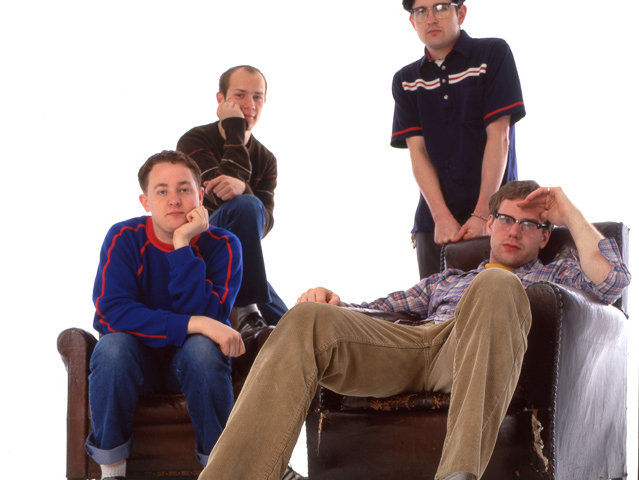
Karate
Updated: Nov 27, 2025
In the quiet corners of indie rock, few bands have left a mark as subtle yet enduring as Karate. Formed in Boston in 1993, the group constructed a refined sound that uniquely married the precision and improvisation of jazz, the rhythmic complexity and tension of post-hardcore, and the spacious calm of slowcore. Centered on the intricate guitar work and thoughtful lyricism of Geoff Farina, the band built a legacy on intricate musicianship and patient song structures that rewarded attentive listening. Never achieving mainstream fame, Karate nevertheless became a crucial, quietly influential band, shaping entire pockets of the indie landscape. Years after their original dissolution in 2005, a new generation discovered their sound through reissues by The Numero Group, leading to a surprise 2022 reunion and the release of their first new studio album in two decades, Make It Fit, proving that their nuanced music continues to resonate deeply.

Biography
Karate began with guitarist and vocalist Geoff Farina, bassist Eamonn Vitt, and drummer Gavin McCarthy. Their early recordings captured the raw, intellectual energy of Boston’s underground music scene in the early 1990s, where punk roots and a burgeoning experimental impulse intersected. The 1993 demo Sometimes You’re a Radio and the self-titled debut in 1995 stood out for their distinctive sound: a clean, almost ascetic guitar tone, patient, measured tempo, and songwriting that was emotionally thoughtful rather than overtly aggressive. This early period established the group's foundational tension between the structure of rock and the space of post-hardcore.
In 1995 Jeff Goddard joined as the new bassist, allowing Vitt to shift to second guitar and solidifying the four-piece lineup for In Place of Real Insight (1997). This album marked an increase in dynamic range and compositional density, sharpening their sound while preserving the introspective sensibility that made them distinct. Soon after, Vitt left the band to pursue a medical career, returning Karate to a core trio and opening a new chapter of musical exploration centered on interplay.
With Farina and McCarthy both deeply invested in jazz theory and improvisation, the band fully embraced a more open, elastic, and experimental approach. The Bed Is in the Ocean (1998) revealed this profound shift, featuring compositions that were subtle and spacious, guided by rhythmic and melodic interplay rather than sonic force. They extended these ideas on Unsolved (2000), a record structured in long, atmospheric movements that blurred the traditional lines between post-rock minimalism and sophisticated indie rock. The 2001 EP Cancel/Sing distilled this approach into two extended tracks that stretched their sound and showcased their mastery of slow-build tension.
The early 2000s saw Karate reach new heights of refinement. Some Boots (2002) offered warmth and groove, incorporating more overt R&B and blues influences into their jazz-rock framework. This period saw them grow into a band whose work was intensely rewarding for attentive listeners. Pockets (2004) refined their intricate songwriting into tightly focused, carefully arranged compositions, confirming Karate as one of the era’s most innovative and musically literate indie bands.
The band’s influence was cemented by their extraordinary dedication to touring. Karate played nearly seven hundred shows in more than twenty countries, developing a reputation for dynamic, intense, and musically precise live performances that often lasted over two hours. The unrelenting intensity of this schedule eventually took its toll, and Farina’s hearing issues forced the band to disband in 2005. Their final performance took place in Rome on July 10, concluding an essential era of American underground music.
Even apart, the members remained active, carrying their distinctive musicality into new projects. Farina released several solo albums and collaborated with Chris Brokaw. McCarthy performed with other projects, including the experimental rock band E. Goddard continued playing bass in various groups and contributed to Brokaw’s Incredible Love. In 2007, the live album 595, recorded in Leuven, Belgium, captured a performance so compelling and technically pristine it became an official release.
Karate’s work was largely out of print for years, contributing to their cult status, until The Numero Group began reissuing their catalog in 2021. These reissues brought their music to a new generation of listeners and allowed longtime fans to reconnect with lost albums. The archival campaign culminated in the eight-disc Complete Studio Recordings box set in 2023, cementing Karate’s definitive place in indie history.
The band returned in 2022, performing live for the first time in seventeen years. Appearances at festivals such as Primavera Sound in 2023 introduced Karate to fans who had known them only through streaming or word of mouth. In 2024, they released Make It Fit, their first new studio album in twenty years. Working with longtime engineer Andy Hong, the album is not a recreation of the past but a natural continuation of the band’s evolution, full of fresh rhythms, textures, and careful musicianship. Numero Group followed this resurgence with If You Can Hold Your Breath (2025), a box set collecting all of Karate’s 1990s recordings, from earliest demos to 7-inch singles.
Watch
"There Are Ghosts" Live March 2022
Live 1997
Personnel
Geoff Farina (Guitar, vocals)
Gavin McCarthy (Drums)
Jeff Goddard (Bass)
Eamonn Vitt (Bass, guitar)
Discography
Karate (1995) The band’s self-titled debut, capturing their early blend of post-hardcore energy and patient, minimal songwriting. It introduced their signature clean guitar tone and thoughtful tempo. Key tracks: “Every Sister” and “Gasoline.”
In Place of Real Insight (1997) Featuring the four-piece lineup, this album sharpened their sound, delivering dynamic tension and introspective sensibility while still maintaining tight arrangements. Key tracks: “It's 98 Stop” and “New Martini.”
The Bed Is in the Ocean (1998) The first album as a core trio, marking a pivot toward a more jazz-influenced, spacious, and subtle approach, emphasizing interplay and atmosphere over forceful delivery. Key track: “Up Nights” and "Diazapam."
Unsolved (2000) An expansion of their experimental direction, structuring songs into long, atmospheric movements that skillfully blurred the lines between the instrumental complexity of post-rock and indie rock sensitivity. Key tracks: “Unsolved” and “Sever.”
Some Boots (2002) This album offered a warmer, more accessible sound while maintaining the band's rhythmic intricacy. It is highly regarded for its groove and refined songwriting. Key track: “Original Spies.”
Pockets (2004) Refining their intricate craft further, Pockets presented tightly focused, carefully arranged compositions that served as the band's final studio album of their original run. Key tracks: “Water” and “Concrete.”
Make It Fit (2024) Karate's surprise return and first new studio album in twenty years. Working as a trio, the album is a natural continuation of their sound, full of fresh rhythms, textures, and careful musicianship. Key track: “Fall to Grace.”