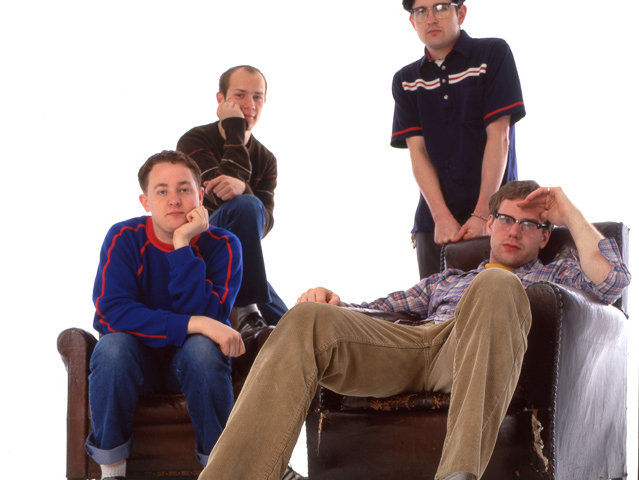
Rodan
- Nov 23, 2025
- 4 min read
Updated: Nov 27, 2025
Rodan emerged from the fertile Louisville, Kentucky, music scene in 1992 and quickly became one of the most important forces in the evolution of American post-hardcore and the early language of what would soon be called math rock. Although their time together was intensely brief, the band created a singular sound that blended the tension and spaciousness of their local peers like Slint with greater urgency, fuller arrangements, and a sharpened sense of musical architecture. Their music moved between deliberate quiet passages and eruptions of jagged intensity, built from shifting patterns, interlocking guitar lines, and dynamic vocals that often hovered between spoken reflections and raw shouts. The results felt both cerebral and visceral, a combination that helped shape the direction of underground rock for years to come.

Biography
Rodan emerged from the fertile Louisville, Kentucky, music scene in 1992 and quickly became one of the most important forces in the evolution of American post-hardcore and the early language of what would soon be called math rock. Although their time together was intensely brief, the band created a singular sound that blended the tension and spaciousness of their local peers like Slint with greater urgency, fuller arrangements, and a sharpened sense of musical architecture. Their music moved between deliberate quiet passages and eruptions of jagged intensity, built from shifting patterns, interlocking guitar lines, and dynamic vocals that often hovered between spoken reflections and raw shouts. The results felt both cerebral and visceral, a combination that helped shape the direction of underground rock for years to come.
Rodan began when guitarists Jason Noble and Jeff Mueller, longtime collaborators from Louisville’s close-knit art and music circles, teamed up with bassist and vocalist Tara Jane O’Neil and a rotating cast of drummers. After brief early lineups with Jon Cook and John Weiss, the group found stability in 1993 with drummer Kevin Coultas. That same year, the band self-released the Aviary demo, which circulated through the underground and established the core of the material that would define their short career. Two of its songs, “Milk and Melancholy” and “Exoskeleton,” were re-recorded and issued later in 1993 as the single How the Winter Was Passed, an early document of their precision and emotional force. The release that permanently secured Rodan’s reputation arrived in 1994 when the band recorded their only full-length album, Rusty, with engineer Bob Weston (of Shellac). Built largely from reimagined versions of the Aviary material, the album presented six long, dynamic pieces that perfectly balanced angular riffing with atmospheric drift. Rusty was immediately embraced within the independent music community and became one of the key early records associated with the emerging post-rock vocabulary. The band supported the album with touring, appeared in the independent film Half Cocked, and contributed the song “Tron” to its soundtrack, all while continuing to refine their approach in live performances that emphasized controlled intensity and structural complexity.
Despite the critical attention surrounding Rusty, Rodan dissolved by the end of 1994. Their breakup only deepened the album’s mystique and immediately set the stage for a wave of influential projects that would further cement Louisville's place in experimental rock. The post-Rodan timeline is a roadmap of interconnected collaboration: Jeff Mueller went on to co-found June of 44, continuing to explore intricate, guitar-driven music from a new, more expansive angle. Tara Jane O’Neil formed Retsin, played in The Sonora Pine, developed a critically acclaimed long solo career, and collaborated widely. Jason Noble became a central figure in Rachel’s, the celebrated chamber ensemble that blended classical composition with experimental rock, and later reunited with Mueller in Shipping News. Kevin Coultas also contributed to Rachel’s and joined O’Neil in The Sonora Pine, extending the dense, interconnected lineage of Louisville’s creative scene. As interest in Rodan’s work grew over time, unreleased and archival recordings resurfaced. In 2013, the compilation Fifteen Quiet Years gathered rare non-album tracks and captured the band’s evolution beyond Rusty. Later, in 2019, a long-lost set of early recordings appeared as Hat Factory ’93, offering an intimate look at the band’s formative period. These releases reinforced how much ground Rodan covered in only a few years and how their innovative musical ideas continued to resonate long after their breakup.
Watch
Live in Athens, Georgia - July 1994
Personnel
Jason Noble: Guitar, Vocals
Jeff Mueller: Guitar, Vocals
Tara Jane O’Neil: Bass, Vocals
Kevin Coultas: Drums (Main studio and touring drummer)
Early Drummers: Jon Cook, John Weiss
Discography
Rusty (1994) The band's sole full-length album, released on Quarterstick Records. It is a landmark work in the post-hardcore and math rock genres, featuring six extended, emotionally and structurally complex tracks. The album seamlessly shifts between loud, jarring intensity and quiet, atmospheric tension. Key tracks include "The Everyday World of Insanity," "Bible Silver," and "Tooth Fairy Retribution Manifesto."
How the Winter Was Passed (1993) A two-song 7" single released on the Self-Starter Foundation. It features early, re-recorded versions of two songs from the Aviary demo, providing a snapshot of the band's precise, dynamic sound shortly before recording Rusty. Key tracks include "Milk and Melancholy."
Fifteen Quiet Years (2013) A compilation released on Quarterstick Records, gathering non-album tracks, B-sides, and rare material. This release served to reinforce the band's legacy by showcasing their range beyond Rusty, including material originally recorded for the Half Cocked soundtrack. Key tracks include "Tron" and "Cold Rises."
Hat Factory ’93 (2019) A posthumously released archival recording on Touch and Go Records. This document is a live-to-tape session from 1993, offering a raw, energetic look at the band's repertoire in its formative stage, highlighting the interplay and power of the core lineup. Key tracks include "Milk and Melancholy (Early Version)."