Big Star
- Nov 22, 2025
- 4 min read
Updated: Nov 27, 2025
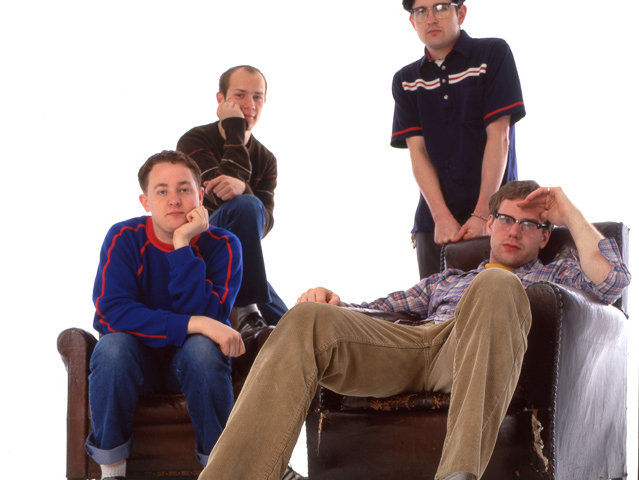
In the long arc of American rock music, few bands have cast a shadow as strangely elongated as Big Star, a group whose commercial impact barely registered in their own time, yet whose aesthetic fingerprints show up everywhere in the decades that followed. Formed in Memphis in 1971 by Alex Chilton, Chris Bell, Jody Stephens, and Andy Hummel, Big Star emerged as a paradox: four young Southerners working inside Ardent Studios, conjuring immaculate pop songs that seemed to arrive pre-weathered, glowing with warmth but edged in melancholy. They perfected the foundational sound of power-pop, characterized by chiming guitars, soaring harmonies, and undeniable hooks, bridging the sonic sophistication of The Beatles with the rock urgency of The Who. Despite their initial commercial failure due to disastrous distribution issues, their three 1970s albums—especially #1 Record and Third—became gospel for successive generations of alternative, indie, and jangle-pop bands, including R.E.M. and The Replacements, transforming them into arguably the most influential American cult rock band of the 1970s.

Biography
Big Star’s origin myth already reads like a prologue to cult sainthood. Alex Chilton, fresh off his blue-eyed soul fame with The Box Tops, a teenager with a number one single to his name, crossed paths with Chris Bell, a studio-obsessed perfectionist whose devotion to The Beatles bordered on spiritual. Their partnership was uneasy, electric, and briefly transcendent. When the four musicians took the name Big Star from a Memphis grocery store sign glowing outside the studio, it was not irony so much as audacity, an aspirational joke aimed at the charts that would ultimately refuse them.
Their debut, #1 Record (1972), was the kind of album that critics love writing about because it seems to arrive fully formed. Chilton and Bell approached the Lennon and McCartney model with almost devotional sincerity, trading songs that flickered between teenage yearning (“Thirteen”) and soaring defiance (“The Ballad of El Goodo”). The guitars chimed, the harmonies shimmered, and the hooks were undeniable. The reviews were rapturous. But Stax Records, beleaguered, overextended, and soon to be gutted by corporate handoffs, could not get the record into stores. Big Star became that cruelest of rock phenomena: a band whose music people wanted to buy, if only they could find it.
The failure stung. Bell, already battling depression and disillusioned by the mismatch between acclaim and reality, left the band. When the remaining trio regrouped for 1974’s Radio City, they emerged looser, sharper, and unexpectedly explosive. If #1 Record was a studio gem, Radio City was a swinging live wire. “O My Soul” opened the album with fractured funk. “Back of a Car” and “September Gurls” delivered some of the most beloved power-pop ever put to tape. Chilton’s songwriting grew both more idiosyncratic and more emotionally unguarded. And still, the same fate followed them: glowing reviews, botched distribution, another near miss.
By the time work began on their third album, Big Star existed in name only. The sessions at Ardent in late 1974 paired Chilton and Stephens with producer Jim Dickinson and a rotating cast of friends, lovers, and whoever else wandered through the studio. The resulting album, eventually released as Third or Sister Lovers, defies categorization, which in retrospect feels like the point. It is a disintegrating postcard filled with woozy strings, half-muttered vocals, and lullabies that curdle into breakdowns. Songs like “Holocaust” and “Kanga Roo” remain among the most harrowing ever linked to the power-pop canon. Third feels like the sound of a band breaking apart, slowly, beautifully, and without warning.
The album was shelved. The band dissolved. Months later, Chris Bell died in a car accident. Big Star became myth through absence.
And then, somehow, the myth grew. In the 1980s, bands like R.E.M. and The Replacements did not just cite Big Star as an influence, they evangelized them. Reissues and archival excavations in the 1990s reintroduced the band to listeners who had only heard the whispers. By the time Chilton and Stephens resurrected Big Star with The Posies’ Jon Auer and Ken Stringfellow in 1993, the band’s stature had grown to the point where their existence felt like both a resurrection and a parallel universe correction. They toured, they played festivals, and they eventually released a new studio album, In Space, in 2005, a charmingly shambolic reminder that Chilton remained uninterested in myth-making.
When Alex Chilton died unexpectedly in 2010, and Andy Hummel just months later, the band’s legacy threatened to calcify into eulogy. But Jody Stephens, the last surviving original member, refused to let the story end in grief. The ongoing Big Star’s Third performances, featuring an evolving cast that has included Mike Mills, Chris Stamey, and Robyn Hitchcock, became a celebration of one of rock’s most unlikely masterpieces, staging the broken romance of Third as something communal, cracked, and deeply human. Today, Big Star occupies a rare cultural space. They are both a musician’s band and a listener’s band, estudiable but not academic, catchy but never simple. They are a ghost that keeps showing up in the songs of others, whenever a guitar jangles with a particular shimmer, whenever a melody floats between euphoria and sorrow, whenever a pop song feels fragile enough to break.
Watch
"Thirteen" Music Video
Personnel
Alex Chilton (Guitar, piano, vocals)
Chris Bell (Guitar, vocals)
Andy Hummel (Bass, vocals)
Jody Stephens (Drums, vocals)
Discography
#1 Record (1972) The debut album, co-led by Chilton and Bell, that defined the power-pop genre with its immaculate production, soaring harmonies, and songwriting symmetry. Despite critical raves, it was a commercial failure due to poor distribution. Key tracks: “Thirteen,” “The Ballad of El Goodo,” and “Feel.”
Radio City (1974) Recorded as a trio following Bell's departure, this album is looser, sharper, and more explosive than the debut, showcasing Chilton's emerging idiosyncratic style. It is widely considered one of the greatest power-pop records ever made. Key tracks: “September Gurls,” “Back of a Car,” and “O My Soul.”
Third / Sister Lovers (1978/1985) The infamous third album, recorded primarily by Chilton and Stephens in 1974 but shelved for years. It is a challenging, impressionistic masterpiece defined by dark, fragmented songwriting, lush orchestration, and emotional collapse, serving as the band's most critically revered and influential work. Key tracks: “Holocaust,” “Kanga Roo,” and “Big Black Car.”
In Space (2005) The band's fourth and final studio album, recorded 30 years after Third by the reunited lineup featuring Chilton, Stephens, and The Posies' Jon Auer and Ken Stringfellow. The record is a return to their melodic, shambolic power-pop roots. Key tracks: “Dony,” and “Lady Sweet.”